Pronote
Why choose French education for your child?
With a history dating back to 1789, the French educational system stands out among the best in the world! With its national curriculum, teaching methods, and structured approach to learning, more and more international families are opting for the French educational system to benefit from high-quality education on a global scale.

Structured – meets the requirements set by the French National Education
Academic – fosters knowledge, communication, and critical thinking
Humanistic – values of tolerance, equality, opportunity, and intellectual curiosity
Transferable – continuous education from kindergarten to the Baccalaureate
Globally recognized
The French Baccalaureate is a globally renowned diploma, opening doors to the best universities and schools in France, South Africa, Australia, Canada, the United Kingdom, the United States, and elsewhere in the world.
The French educational system, from Kindergarten to Terminale (Baccalaureate), offers students the opportunity to receive bilingual education within a multicultural atmosphere. Students who have followed this French path are highly valued by higher education institutions. They are encouraged to develop independent thinking and self-directed learning through a structured program that prepares them to join the world’s most prestigious universities.

Easily transferable educational continuum
French education is both universal and locally adaptable, following the standards of the French educational system, from Kindergarten to the Baccalaureate.
The international network of French schools, managed by the AEFE, offers a high-quality, unique program with more than 500 schools in 139 countries, sharing the same educational philosophy and curriculum. This ensures a consistent and high-level experience for students.
Varied and balanced
The French curriculum ensures equal educational opportunities for all students, regardless of their background. It combines diversity and balance, encouraging creativity while adhering to a rigorous national structure. It promotes questioning and encourages students to think of solutions to everyday challenges.
French education aims to shape minds open to the realities of today’s world. It helps multilingual students develop cultural sensitivity by learning new languages, enabling them to engage with other communities in an ever-changing world.

Structured, regulated, validated, rigorous
The French educational system is regulated by the Ministry of National Education, Higher Education, and Research, ensuring a structured and nationally validated curriculum. It combines traditional and modern teaching methods, with high academic standards and rigorous discipline, making it a global benchmark for quality.
To receive approval from the French authorities, a school must follow the French curriculum defined by the French Ministry of Education. The school submits a detailed application and undergoes an audit by French authorities. The audit results are then reviewed by the French Ministry of Education and the French Ministry of Foreign Affairs in Paris, which grant their approval.
A traditional style with modern approaches
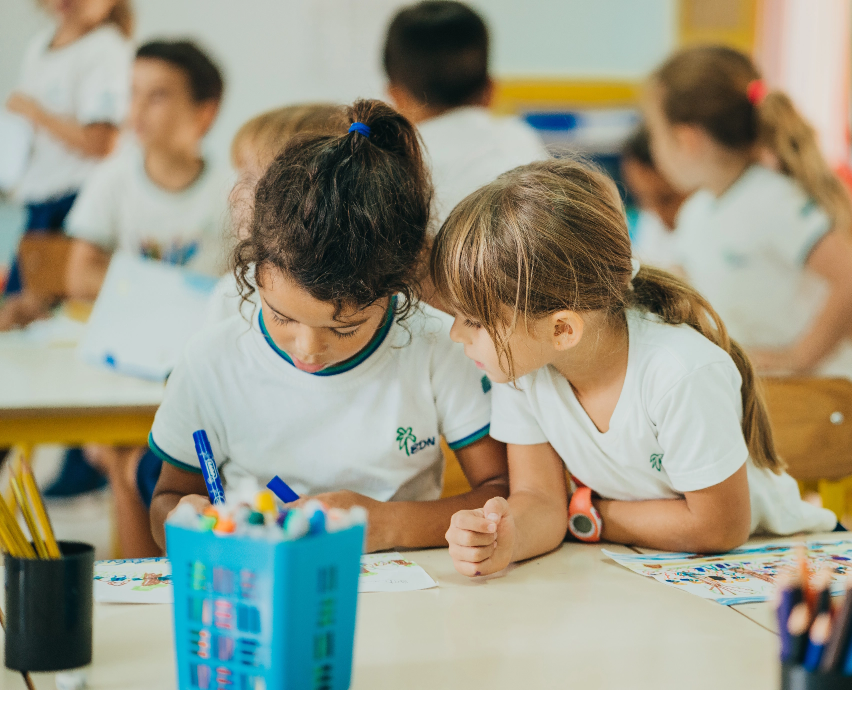
The French educational system trains students in essential skills such as reading, writing, and arithmetic, while incorporating modern approaches such as research, problem-solving, and language proficiency. Teachers adapt their methods, promoting group, pair, and individual work within a structured framework.
The curriculum encourages critical thinking, questioning preconceived ideas, and developing analytical reasoning. It also emphasizes cultural understanding and the acquisition of multiple languages. As a result, students in the French educational system develop crucial skills such as critical thinking, research, and preparation for higher education and their future.